About News from Azerbaijan Higher Technical Schools
In the Soviet period, the present Azerbaijan State Oil and Industry University (ASOIU) as the flagman of oil and gas higher educational institutions published the journal "Oil and Gas" (the series of "Transactions of the universities") for more than forty years.
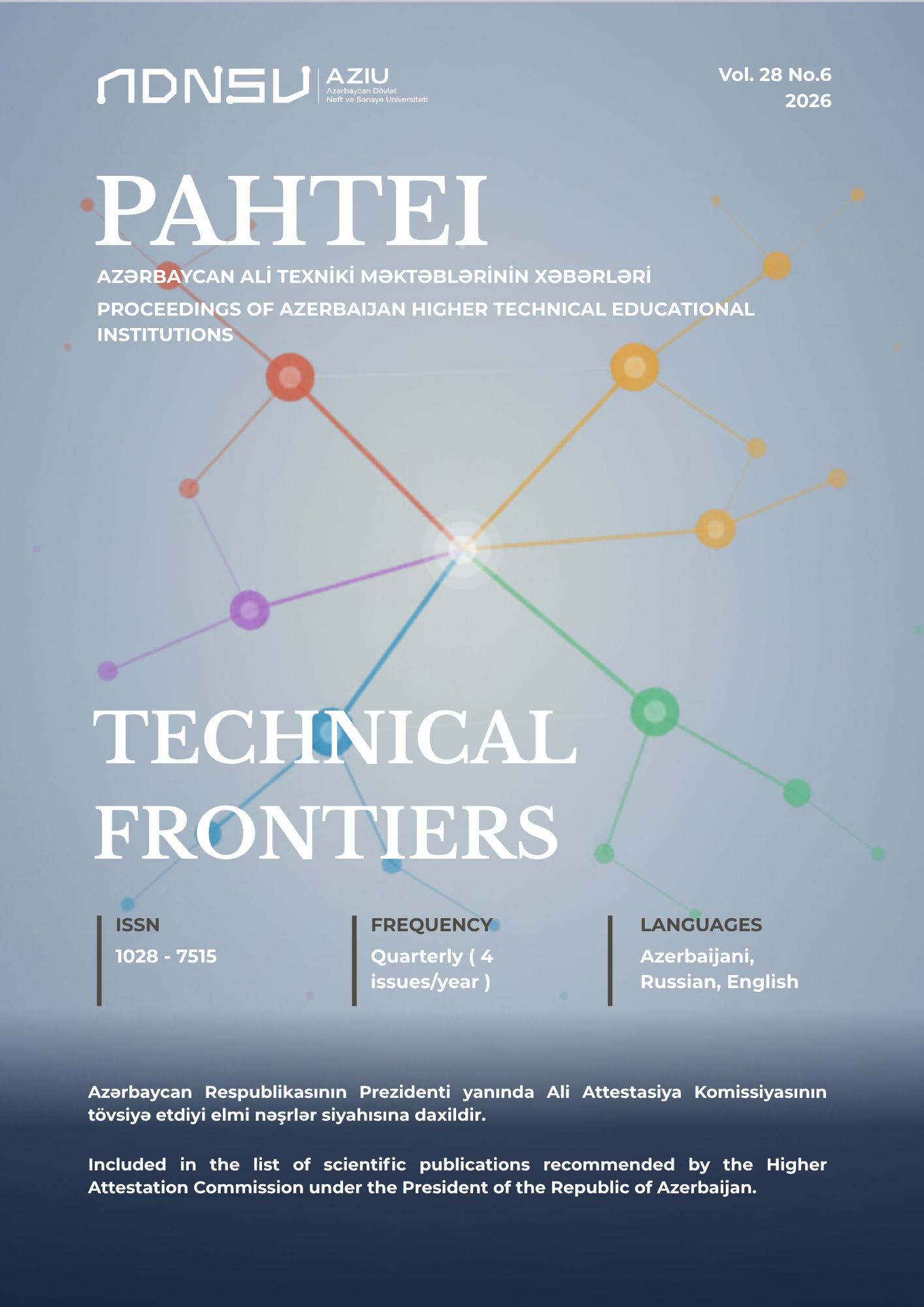
In 1999 the Association of higher technical educational institutions of Azerbaijan stated about the need of an issue of a new journal (with the corresponding status). It is natural that the initiator of an updating of a journal was ASOIU (former Azerbaijan State Oil Academy), prior issuer and legal antecedent. By decision of the leadership of our university a new editorial office and editorial board was formed, and also a computer center was created, and in July 1999 the first issue of the "Proceedings of Azerbaijan High Technical Educational Institutions" journal was published.
- Geology
- Oil and gas
- Chemistry and Chemical Technology
- Mechanics and Machine Engineering
- Energy and Power Engineering
- Informatics and automatics
- Transport
- Construction and architecture
- Mechatronics and Robotics
- Metrology and Instrument Engineering
- Ecology and Safety
- Economics and Management
- Brief information
The periodicity of the journal is systemic, 4 numbers in a year is published. Papers are published in Azerbaijani, Russian and English.
Registration of the journal in the International Standard Serial Numbers Center and its inclusion into the list of the scientific editions, recommended by High Certification Commission near the President of Azerbaijan Republic for publications of the basic results of dissertations.
Current Issue - Volume 28, No. 2 (2026)
Azərbaycan iqtisadiyyatında investisiya fəaliyyətinin təhlili və xarici investisiya cəlbi problemləri
Abstract:
Məqalənin əsas məqsədi Azərbaycan iqtisadiyyatında investisiya fəaliyyətinin mövcud vəziyyətinin və ...
Məqalənin əsas məqsədi Azərbaycan iqtisadiyyatında investisiya fəaliyyətinin mövcud vəziyyətinin və dina-mik inkişaf meyllərinin kompleks şəkildə təhlil edilməsi, eyni zamanda xarici investisiyaların cəlb edilməsi sahəsində mövcud olan əsas problemlərin müəyyənləşdirilməsidir. Tədqiqat çərçivəsində müqayisəli təhlil, statistik analiz, sistemli yanaşma və ümumiləşdirmə metodlarından istifadə edilmişdir. Təhlil və qiymətləndi-rilmələr əsasən Dövlət Statistika Komitəsinin illik hesablatlarının məlumatları əsasında aparılmışdır. Aparılan təhlil göstərir ki, ölkədə investisiya axınları uzun müddət əsasən enerji sektorunda cəmləşmişdir. Qeyri-neft sektoruna yönələn investisiyaların payı son illərdə artım dinamikası nümayiş etdirsə də, hələ də iqtisadiyyatın şaxələndirilməsi baxımından yetərli səviyyəyə çatmamışdır. Bununla yanaşı, institusional mühitin keyfiyyəti, hüquqi çərçivənin effektivliyi, infrastruktur təminatı və regionlararası inkişaf fərqləri xarici investorların qərarlarına təsir edən əsas amillər kimi çıxış edir. Tədqiqatın nəticələri əsasında müəyyən edilmişdir ki, inves-tisiya mühitinin təkmilləşdirilməsi üçün institusional islahatların dərinləşdirilməsi, maliyyə bazarlarının inki-şaf etdirilməsi, qeyri-neft sektorunda məqsədli təşviq mexanizmlərinin genişləndirilməsi zəruridir. Məqalənin tətbiqi əhəmiyyəti ondan ibarətdir ki, irəli sürülən təklif və tövsiyələr dövlət investisiya siyasətinin formalaş-dırılması və xarici investisiyaların cəlb edilməsi mexanizmlərinin optimallaşdırılması baxımından istifadə oluna bilər. Məqalənin elmi yeniliyi investisiya fəaliyyətinin struktur təhlilinin sistemli şəkildə aparılması, Azərbaycan üçün uyğunlaşdırılmış makroiqtisadi təşviq alətlərinin əsaslandırılması ilə bağlıdır. Bununla bərabər, tədqiqat mövcud elmi ədəbiyyata töhfə verərək bu sahədə gələcək araşdırmalar üçün nəzəri-metodoloji baza rolunu oynaya bilər.
Read more
MİKROŞƏBƏKƏLƏRDƏ ENERJİ AXINININ ÇOXMEYARLI OPTİMALLAŞDIRILMASI METODLARININ İŞLƏNMƏSİ
Abstract:
Tədqiqatın məqsədi – Məqalədə Azərbaycanın nəqliyyat-logistika sisteminin qlobal aspektləri baxılmı...
Tədqiqatın məqsədi – Məqalədə Azərbaycanın nəqliyyat-logistika sisteminin qlobal aspektləri baxılmışdır. Nəqliyyat-logistika sisteminin ölkə iqtisadiyyatında rolu və əhəmiyyəti araşdırılmışdır. Azərbaycanın son illərdə nəqliyyat-logistika sferasında apardığı islahatlar və iri layihələr təhlil edilmişdir. Ölkənin tranzit poten-sialının yüksək olmasının strateji aspektləri əsaslandırılmışdır. Yaxın və uzaq perspektivdə Azərbaycanın nəqliyyat-logistika sisteminin regional və qlobal rolu üzrə təkliflər hazırlanmışdır.
Tədqiqatın metodu formasında – analiz, sintez, müqayisə, statistik təhlil və proqnozlaşdırma metodlarından istifadə edilmişdir. Bunlarla bərabər, nəqliyyat-logistika problemlərinə dair tədqiqatlar aparmış, müxtəlif ölkə və xarici tədqiqatçılarının əsərlərinə diqqət yetirilmişdir.
Tədqiqatın nəticələri – məqalədə verilmiş təkliflərdən regional və qlobal səviyyədə nəqliyyat-logistika sis-temindən səmərəli istifadə edilməsi üzrə əlavə tədbirlərin və layihələrin hazırlanmasında istifadə oluna bilər.
Read more
DÖVLƏT BÜDCƏSININ IQTISADI TƏNZIMLƏMƏDƏ ROLU VƏ MALIYYƏ SIYASƏTININ INKIŞAF PRIORITETLƏRI
Abstract:
Məqalədə Azərbaycan iqtisadiyyatında dövlət maliyyə siyasətinin tənzimləyici rolu və müasir inkişaf ...
Məqalədə Azərbaycan iqtisadiyyatında dövlət maliyyə siyasətinin tənzimləyici rolu və müasir inkişaf prioritetləri araşdırılmışdır. Tədqiqatda dövlət maliyyə siyasəti makroiqtisadi sabitliyin qorunması, iqtisadi artımın dəstəklənməsi, sosial rifahın təmin edilməsi, qeyri-neft sektorunun inkişafı və struktur transformasiyanın maliyyələşdirilməsi baxımından təhlil edilmişdir. Nəzəri yanaşmalar əsasında müəyyən edilmişdir ki, dövlət maliyyə siyasəti yalnız büdcə gəlir və xərclərinin idarə olunması mexanizmi deyil, həm də iqtisadiyyatın uzunmüddətli inkişaf istiqamətlərini formalaşdıran strateji tənzimləmə alətidir.Məqalədə dünya təcrübəsi müqayisəli şəkildə qiymətləndirilmiş, Avropa İttifaqı, Norveç, Sinqapur, Cənubi Koreya, Çili və OECD ölkələrinin fiskal idarəetmə modelləri təhlil edilmişdir. Müəyyən olunmuşdur ki, uğurlu maliyyə siyasəti fiskal intizam, strateji ehtiyatların qorunması, nəticəyönümlü büdcə idarəetməsi, şəffaflıq və insan kapitalına yönəlmiş investisiyalar əsasında formalaşır. Bu təcrübələrin Azərbaycan üçün əsas əhəmiyyəti neft gəlirlərindən asılılığın azaldılması, qeyri-neft sektorunun maliyyə mexanizmləri ilə stimullaşdırılması və büdcə xərclərinin səmərəliliyinin artırılması ilə bağlıdır.2016-2025-ci illər üzrə statistik göstəricilərin təhlili göstərmişdir ki, Azərbaycan iqtisadiyyatında dövlət maliyyə siyasəti müxtəlif mərhələlərdə həm sabitləşdirici, həm də inkişafyönümlü funksiya yerinə yetirmişdir. Büdcə gəlirlərinin və xərclərinin nominal artımı dövlətin iqtisadi proseslərdə maliyyə rolunun gücləndiyini göstərir. 2020-ci ildə büdcə xərclərinin artması fiskal siyasətin böhran şəraitində iqtisadiyyatı dəstəkləyən rolunu nümayiş etdirmiş, 2025-ci ildə isə büdcənin profisitlə icra olunması fiskal dayanıqlığın gücləndiyini göstərmişdir. Bununla yanaşı, investisiya fəallığının azalması və qeyri-neft sektorunda artım tempinin məhdudlaşması maliyyə siyasətinin növbəti mərhələdə daha çox məhsuldar sahələrə, ixracyönümlü istehsala, innovasiyalara və insan kapitalına yönəldilməsini zəruri edir.Nəticə etibarilə, Azərbaycan iqtisadiyyatında dövlət maliyyə siyasətinin əsas inkişaf prioritetləri qeyri-neft sektorunun genişləndirilməsi, dövlət xərclərinin nəticəyönümlü idarə olunması, investisiya mühitinin yaxşılaşdırılması, sosial müdafiə mexanizmlərinin gücləndirilməsi, regionların tarazlı inkişafı və fiskal dayanıqlığın qorunması ilə bağlıdır. Bu istiqamətlər maliyyə siyasətinin yalnız cari büdcə idarəetməsi deyil, həm də uzunmüddətli dayanıqlı inkişafın əsas təminat mexanizmi olduğunu göstərir.
Read more
ЦИФРОВАЯ ТРАНСФОРМАЦИЯ И ЭКОНОМИЧЕСКАЯ БЕЗОПАСНОСТЬ В УСЛОВИЯХ МЕНЯЮЩЕЙСЯ КОНЪЮНКТУРЫ ГЛОБАЛЬНОЙ ХОЗЯЙСТВОВАНИЯ
Abstract:
Актуальность темы разъясняется постоянными изменениями в структуре мировой экономики и после-дующим ...
Актуальность темы разъясняется постоянными изменениями в структуре мировой экономики и после-дующим появлением различных угроз и опасностей для экономической безопасности. Теоретические аспекты обеспечения экономической безопасности изучаются в связи со сложными традиционными и цифровыми предположениями, а её особенности обосновываются в контексте цифровой трансформа-ции. Установлено, что экономическая безопасность является не отдельной стратегией, а неотъемлемой частью государственной безопасности и играет важную роль в обеспечении стабильного экономиче-ского развития и повышении конкурентоспособности национальной экономики. В контексте финансо-вой стабильности, энергетической безопасности, продовольственной безопасности и социальной без-опасности описаны структурные особенности экономической безопасности, и конкретно обосновано положение каждой из них. Установлено, что синхронное развитие секторов народного хозяйства в процессе цифровой трансформации обеспечивает экономическую безопасность государства, повышает конкурентоспособность национальной экономики, таким образом, гарантирует необходимый уровень благосостояния населения. С помощью методов наблюдения и статистического анализа изучены пока-затели социально-экономического развития Республики Таджикистан, и установлено, что за послед-ние пять лет эти показатели растут удовлетворительными темпами.
Результаты исследования создадут условия для разработки значимых механизмов и необходимых фи-нансовых инструментов в деятелности государственных органов, отраслевых специалистов и экономи-стов по обеспечению экономической безопасности в контексте структурных изменений в глобальной экономической системе.
Read more
Xidmət və nəqliyyat sektorlarının sosial-iqtisadi inkişafa təsiri: nəzəri yanaşmalar və institusional amillər
Abstract:
Məqalədə xidmət sektorunun, xüsusilə nəqliyyat sahəsinin iqtisadi və sosial-iqtisadi inkişafda rolu ...
Məqalədə xidmət sektorunun, xüsusilə nəqliyyat sahəsinin iqtisadi və sosial-iqtisadi inkişafda rolu nəzəri və empirik ədəbiyyat əsasında araşdırılır. Tədqiqatda xidmət sektorunun iqtisadi artıma təsiri neoklassik, keynsçi, endogen artım və institusional yanaşmalar kontekstində sistemləşdirilir. Göstərilir ki, xidmət sektorunun inkişafı yalnız ÜDM-də pay artımı ilə deyil, onun məhsuldarlıq səviyyəsi, bilik-intensivliyi, ixrac potensialı, məşğulluq yaratma qabiliyyəti və institusional mühitlə əlaqəsi əsasında qiymətləndirilməlidir. Məqalədə nəqliyyat sektorunun xüsusi rolu bazara çıxışın genişlənməsi, logistika xərclərinin azalması, regional inteqrasiya, əmək mobilliyi, məşğulluq imkanlarının artması və sosial xidmətlərə əlçatanlığın yaxşılaşması baxımından əsaslandırılır. Ədəbiyyatın müqayisəli təhlili göstərir ki, nəqliyyat investisiyalarının iqtisadi və sosial nəticələri avtomatik xarakter daşımır; bu nəticələr layihələrin keyfiyyəti, məkan seçimi, şəbəkə əlaqəliliyi, dövlət idarəetməsi, logistika performansı və tamamlayıcı institusional siyasətlərdən asılıdır. Məqalənin əsas elmi nəticəsi ondan ibarətdir ki, xidmət və nəqliyyat sektorlarının inkişafı iqtisadi artım, sosial rifah və regional tarazlıq üçün mühüm amildir, lakin bu təsirin davamlı olması üçün məhsuldarlıq, inklüzivlik və institusional keyfiyyət əsas şərt kimi çıxış edir.
Read more
Qeyri-neft sektorunun inkişafında neft gəlirlərin rolu: postkovid dövrünün keyfiyyət metodu ilə təhlili
Abstract:
Son illərdə Azərbaycanın qeyri-neft sektorunun inkişafında neft amilinin sabitləşdirici və inkişaf e...
Son illərdə Azərbaycanın qeyri-neft sektorunun inkişafında neft amilinin sabitləşdirici və inkişaf etdirici rolu yüksəkdir. Milli diversifikasiya siyasətində və xarici şoklardan qorunmaq məqsədilə Azərbaycan Respublikası Dövlət Neft Fondunun (ARDNF) xərcləri mühüm əhəmiyyət kəsb edir. Tədqiqat ARDNF-nin son beş ildə dərc olunmuş rəsmi illik hesabatlarının təhlili əsasında postkovid dövründə qeyri-neft sektorunun inkişafı üçün neft gəlirlərindən istifadənin istiqamətlərini araşdırır. Bu məqsədlə rəsmi sənədlərin təhlili kimi tanınan keyfiyyət metodu tətbiq edilib. Nəticələr göstərir ki, neft gəlirləri dövlət büdcəsini gücləndirməklə və insan kapitalının maliyyələşdirilməsi ilə qeyri-neft sektorunun uzunmüddətli inkişafında mühüm rol oynayır. Bütün bu proseslər fonunda ARDNF-nin fiskal effektivliyi yüksək uyğunlaşma qabiliyyəti nümayiş etdirib və fəaliyyətini üç fərqli xronoloji mərhələdə təşkil edib: müdafiə və qoruma mərhələsi (2020), dövri bərpa və canlanma mərhələsi (2021–2022) vəstruktur transformasiya mərhələsi (2023–2024). Cari məqalənin nəticələri Azərbaycan iqtisadiyyatında qeyri-neft sektorunun inkişafı ilə makroiqtisadi trendlərin bir-biri ilə necə uzlaşdığını anlamaq üçün sistemli elmi töhvələr verir.
Read more
Rəqəmsal transformasiya və elektron ticarətin nəzəri-iqtisadi əsasları
Abstract:
Rəqəmsal transformasiya müasir dövrdə informasiya və kommunikasiya texnologiyalarının həyatın bütün ...
Rəqəmsal transformasiya müasir dövrdə informasiya və kommunikasiya texnologiyalarının həyatın bütün sahələrinə tətbiq olunması ilə bağlı genişmiqyaslı dəyişiklik prosesidir. Bu proses yalnız yeni texnologiyaların istifadəsini deyil, həm də müəssisələrin idarə olunması, biznes fəaliyyətinin təşkili və insanların davranışlarının dəyişməsini əhatə edir. Rəqəmsal transformasiyanın əsas məqsədi fəaliyyətin daha səmərəli, çevik və innovativ şəkildə qurulmasını təmin etməkdir. Elektron ticarət isə bu transformasiyanın ən mühüm nəticələrindən biri hesab olunur. İnternet və rəqəmsal platformalar vasitəsilə həyata keçirilən alqı-satqı əməliyyatları həm müəssisələrə, həm də istehlakçılara vaxt və xərclərə qənaət etməyə imkan verir. Elektron ticarətin inkişafı müştəri məmnuniyyətinin artırılması, təhlükəsiz ödəniş sistemlərinin yaradılması, logistika xidmətlərinin təkmilləşdirilməsi və innovativ marketinq üsullarının tətbiqi ilə sıx bağlıdır. Məqalədə vurğulanır ki, rəqəmsal transformasiya və elektron ticarət bir-birini qarşılıqlı şəkildə dəstəkləyən proseslərdir. Rəqəmsal texnologiyaların inkişafı yeni elektron ticarət imkanları yaradır, elektron ticarətin genişlənməsi isə öz növbəsində rəqəmsal innovasiyalara və texnoloji infrastrukturun inkişafına təkan verir. Nəticədə bu proseslər iqtisadi inkişafın sürətlənməsinə, müəssisələrin rəqabət qabiliyyətinin artmasına və istehlakçılar üçün daha keyfiyyətli xidmətlərin təqdim olunmasına şərait yaradır.
Read more
The role of crıterıa ın portfolıo selectıon problem: comparatıve analysıs of classıcal and fuzzy approaches
Abstract:
Purpose: The aim of this paper is to explore the identification, structuring and evaluation of the c...
Purpose: The aim of this paper is to explore the identification, structuring and evaluation of the criteria for portfolio selection in an uncertain environment. It analyzes shortcomings of the traditional mean-variance framework - especially the lack of information, multidimensional risk, and multiple decision criteria, and explores how fuzzy extensions of this framework can enhance classical approaches rather than replace them.
Method: The method is based on research in the domains of multi-criteria portfolio choice, interactive deci-sion support, fuzzy portfolio evaluation and results in the development of a comparative analysis between the traditional and the fuzzy approaches. The process of portfolio selection is divided into two stages: 1) the iden-tification of efficient portfolios and 2) the ranking of efficient portfolios according to a coherent system of measures that includes the expected return as well as differentiated risk measures, diversification features and other financial metrics.
Findings: Classical models have analytical superiority and computational transparency, while fuzzy models offer a higher level of flexibility and careful consideration of uncertainty, especially in cases of market insta-bility, imperfect information and expert judgment. However, both are not mutually exclusive, oppositely they are dealing with two different levels of the same decision problem. The conclusion of the article is that the choice of methodology of optimization is not the only factor affecting the quality of the portfolio - the identi-fication, organization, weighting, and interpretation of assessment criteria are also important.
Read more
Mühasibat uçotunun tədrisində müasir problemlər və onun muhasibat uçotu peşəsinə təsiri
Abstract:
Tədris metodologiyasının dəyişməsi müasir təhsil sistemində baş verən ən mühüm transformasiyalardan ...
Tədris metodologiyasının dəyişməsi müasir təhsil sistemində baş verən ən mühüm transformasiyalardan biridir və bu proses əsasən ənənəvi tədris üsullarından rəqəmsal tədris modellərinə keçidlə xarakterizə olunur. Ənənəvi tədris metodologiyası uzun illər ərzində müəllim mərkəzli yanaşmaya əsaslanmış, biliklərin əsas mənbəyi kimi müəllim çıxış etmiş, dərslər isə əsasən mühazirə, izah və yadda saxlama üzərində qurulmuşdur. Bu yanaşma müəyyən dövrlər üçün effektiv olsa da, informasiya cəmiyyətinin formalaşması, texnologiyaların sürətli inkişafı və öyrənənlərin ehtiyaclarının dəyişməsi fonunda öz məhdudiyyətlərini göstərməyə başlamışdır. Rəqəmsal tədrisə keçid təhsildə yeni bir mərhələnin əsasını qoymuşdur. Bu keçid yalnız texniki vasitələrin istifadəsi ilə məhdudlaşmır, eyni zamanda təlimin fəlsəfəsinin, məqsədlərinin və metodlarının köklü şəkildə yenilənməsini nəzərdə tutur. Rəqəmsal tədris mühitində öyrənən mərkəzli yanaşma ön plana çıxır, tələbələr passiv bilik qəbul edən deyil, aktiv iştirakçı, tədqiqatçı və yaradıcı subyekt kimi çıxış edirlər. Onlayn platformalar, elektron resurslar, interaktiv proqramlar və multimedia alətləri tədris prosesini daha çevik, əlçatan və fərdiləşdirilmiş edir. Bu transformasiya tədrisin zaman və məkan sərhədlərini əhəmiyyətli dərəcədə aradan qaldırmışdır. Rəqəmsal tədris vasitəsilə təhsilalanlar istənilən vaxt və istənilən məkandan bilik əldə etmək imkanı qazanır, bu isə ömürboyu təhsil konsepsiyasının reallaşmasına mühüm töhfə verir. Rəqəmsal tədris tənqidi düşünmə, problem həll etmə, əməkdaşlıq və informasiya savadlılığı kimi bacarıqların inkişafını stimullaşdırır. Bu bacarıqlar isə müasir əmək bazarının əsas tələbləri sırasında yer alır. Bununla yanaşı, rəqəmsal bərabərsizlik, texniki infrastrukturun qeyri-bərabərliyi və müəllimlərin rəqəmsal bacarıqlarının kifayət qədər olmaması kimi problemlər də mövcuddur və bu məsələlər metodoloji dəyişimin effektivliyinə birbaşa təsir göstərir.
Read more
Azərbaycanın nəqliyyat-logistika sisteminin qlobal aspektləri
Abstract:
Tədqiqatın məqsədi – Məqalədə Azərbaycanın nəqliyyat-logistika sisteminin qlobal aspektləri baxılmı...
Tədqiqatın məqsədi – Məqalədə Azərbaycanın nəqliyyat-logistika sisteminin qlobal aspektləri baxılmışdır. Nəqliyyat-logistika sisteminin ölkə iqtisadiyyatında rolu və əhəmiyyəti araşdırılmışdır. Azərbaycanın son illərdə nəqliyyat-logistika sferasında apardığı islahatlar və iri layihələr təhlil edilmişdir. Ölkənin tranzit potensialının yüksək olmasının strateji aspektləri əsaslandırılmışdır. Yaxın və uzaq perspektivdə Azərbaycanın nəqliyyat-logistika sisteminin regional və qlobal rolu üzrə təkliflər hazırlanmışdır.
Tədqiqatın metodu formasında – analiz, sintez, müqayisə, statistik təhlil və proqnozlaşdırma metodlarından istifadə edilmişdir. Bunlarla bərabər, nəqliyyat-logistika problemlərinə dair tədqiqatlar aparmış, müxtəlif ölkə və xarici tədqiqatçılarının əsərlərinə diqqət yetirilmişdir.
Tədqiqatın nəticələri – məqalədə verilmiş təkliflərdən regional və qlobal səviyyədə nəqliyyat-logistika sistemindən səmərəli istifadə edilməsi üzrə əlavə tədbirlərin və layihələrin hazırlanmasında istifadə oluna bilər.
Read more
REGİONLARDA KƏND TƏSƏRRÜFATININ DİVERSİFİKASİYALAŞDIRILMASINDA KİÇİK VƏ ORTA BİZNESİN ROLU
Abstract:
Tədqiqatın məqsədi məqalədə regionlarda kənd təsərrüfatının diversifikasiyalaşdırılmasında kiçik və ...
Tədqiqatın məqsədi məqalədə regionlarda kənd təsərrüfatının diversifikasiyalaşdırılmasında kiçik və orta biz-nesin rolu araşdırılmışdır. Regionların inkişaf prosesləri ilə bağlı problemlər açıqlanmış və sistemləşdirilmiş-dir. Sahibkarlığın inkişafına mane olan amillər təhlil olunmuşdur. Kiçik və orta sahibkarlığın regionlarda əhəmiyyəti qeyd edilmişdir. Sahibkarlıq subyektlərinin kənd təsərrüfatının inkişafında çoxfunksiyalı fəaliyyəti təhlil edilmişdir. Müasir dövrdə Azərbaycanın regionlarında kənd təsərrüfatının diversifikasiyalaşdırılmasında kiçik və orta biznesin rolunun artırılması üzrə tövsiyələr hazırlanmış və təkliflər verilmişdir.
Tədqiqatın metodu kimi analiz, sintez, müqayisə, statistika və ümumiləşdirmə metodlarından istifadə olun-muşdur. Eyni zamanda, regionlarda kənd təsərrüfatının inkişaf etdirilməsində kiçik və orta biznesin roluna dair araşdırmalar aparan tədqiqatçıların elmi əsərlərinə istinad olunmuşdur.
Tədqiqatın nəticələri – regionlarda kənd təsərrüfatının inkişaf problemlərinin həll edilməsi və onun strukturu-nun genişləndirilməsində kiçik və orta biznesin rolunun artırılması istiqamətlərində daha təsirli tədbirlərin görülməsində faydalı ola bilər.
Read more
Qarabağ Və Şərqi Zəngəzurda ekoloji təmiz ərzaq məhsulları istehsalı kompleksinin yaradılması istiqamətləri
Abstract:
Tədqiqatın məqsədi Qarabağ və Şərqi Zəngəzurda ekoloji təmiz ərzaq məhsulları istehsalı kompleksinin...
Tədqiqatın məqsədi Qarabağ və Şərqi Zəngəzurda ekoloji təmiz ərzaq məhsulları istehsalı kompleksinin yara-dılması istiqamətlərinin araşdırılmasıdır. Qarabağ və Şərqi Zəngəzur iqtisadi rayonlarının inkişaf prosesləri təhlil olunmuşdur. Postkonflikt ərazilərdə ekoloji təmiz məhsulların istehsal edilməsi imkanları baxılmışdır. İşğaldan azad olunmuş ərazilərdə ərzaq məhsullarının istehsalının genişləndirilməsi problemləri təhlil edil-mişdir. Yaxın perspektivdə Qarabağ və Şərqi Zəngəzurda ekoloji təmiz ərzaq məhsulları istehsalı kompleksi-nin yaradılması perspektivləri üzrə təkliflər verilmişdir.
Tədqiqatın metodu olaraq təhlil, sintez, statistika və ümumiləşdirmə metodlarından istifadə edilmişdir. Həm-çinin müxtəlif tədqiqatçıların metodlarına baxılmış və onların elmi əsərlərinə müraciət olunmuşdur.
Tədqiqatın nəticələri – postkonflikt ərazilərin dirçəldilməsində, bu ərazilərdə ekoloji təmiz ərzaq məhsulları istehsal edən komplekslərin təşkili istiqamətində tədbirlərin və mexanizmlərin hazırlanmasında istifadə edilə bilər.
Read more
Methodological foundations for modeling uae–azerbaijan economic relations: a system dynamics approach to trade, fdi, energy transition and connectivity
Abstract:
This article develops a methodological framework for modeling economic relations between the United ...
This article develops a methodological framework for modeling economic relations between the United Arab Emirates and Azerbaijan through a System Dynamics approach. The study begins by reviewing the main methodological tools used in the analysis of international economic cooperation, including gravity models, CGE/GTAP models, panel econometric approaches, input–output and GVC/TiVA analysis, network analysis, Difference-in-Differences and synthetic control methods. While these approaches provide valuable insights into trade potential, macroeconomic effects, value-chain integration and causal relationships, they are limited in capturing feedback loops, time delays, nonlinear effects and cross-sectoral interactions. The paper argues that UAE–Azerbaijan economic relations should be understood as a dynamic system in which trade, FDI, energy transition, logistics connectivity, tourism mobility and institutional cooperation mutually reinforce or constrain each other over time. The proposed System Dynamics framework conceptualizes bilateral economic integration through stocks such as Bilateral Economic Integration Stock, UAE FDI Stock in Azerbaijan, Re-newable Energy Cooperation Capacity, Logistics Connectivity Capacity, Tourism and Mobility Intensity and Institutional Cooperation Strength.
Read more
Eeq siqnalları əsasında virtual mühitin işlənib hazırlanması
Abstract:
Bu işdə elektroensefaloqrafiya (EEQ) siqnallarına əsasən insan emosiyalarının real vaxt rejimində ta...
Bu işdə elektroensefaloqrafiya (EEQ) siqnallarına əsasən insan emosiyalarının real vaxt rejimində tanınması və bu göstəricilərə uyğun olaraq interaktiv virtual mühitin biokibernetik adaptasiyası sistemi işlənib hazırlanmışdır. Tədqiqat çərçivəsində beynəlxalq səviyyədə qəbul olunmuş, 23 iştirakçının multimodal biometrik qeydlərini ehtiva edən DREAMER verilənlər bazasından (dataset) istifadə olunmuşdur. EEQ siqnallarının emalı üçün effektiv maşın öyrənməsi boru xətti (pipeline) qurulmuşdur. Xammal siqnallar küydən təmizləndikdən və normallaşdırıldıqdan sonra, real vaxtda adaptasiya qabiliyyətini təmin etmək məqsədilə 1 saniyəlik sürüşən pəncərələrə (epoxlara) bölünmüşdür. Bu seqmentasiya nəticəsində təlim üçün 85,744 unikal nümunə əldə edilmişdir. Hər bir epoxdan siqnalın həm zaman sahəsi (Mean, Std, Hjorth parametrləri, Skewness, Kurtosis), həm də tezlik sahəsi (Welch metodu ilə spektral güc sıxlığı, spektral entropiya, kənar tezliklər və kanallar arası korrelyasiyalar) üzrə 878 ədəd kompleks xüsusiyyət (features) çıxarılmışdır. Emosiyaların Valence oxu üzrə üçlü təsnifatı (Negative, Neutral, Positive) üçün Random Forest alqoritmi tətbiq edilmiş və sınaq testlərində 70.39% ümumi dəqiqlik (Accuracy) əldə olunmuşdur. Təlim olunmuş bu model rf_model.pkl formatında serializasiya edilərək Python backend platformasına inteqrasiya olunmuşdur. Backend sistemi UDP şəbəkə protokolu vasitəsilə mühərrik səviyyəsində proqnozları ötürərək Unity mühərrikində qurulmuş 3D virtual mühitdəki vizual atmosferi və akustik çarpaz keçidləri (Audio Cross-fader) istifadəçinin daxili emosional vəziyyətinə uyğun olaraq dinamik şəkildə dəyişməyə nail olmuşdur. İşlənib hazırlanmış bu proqram arxitekturası gələcəkdə Virtual Reallıq (VR) texnologiyalarına birbaşa inte-qrasiya imkanına malikdir.
Read more
Multı-parameter clusterıng of cıtızens ın an electronıc demography platform: a mıxed-type dıstance approach to the dıgıtal demographıc portraıt
Abstract:
Electronic demography platforms describe each citizen by many administrative variables of different ...
Electronic demography platforms describe each citizen by many administrative variables of different kinds, and grouping citizens into a small number of interpretable segments is a natural basis for digital-inclusion policy. The objective of this study is to develop and validate a clustering method for the mixed-type digital demographic portrait, a ten-feature description (five continuous, one ordinal, one nominal and three binary variables) produced by an earlier feature-selection stage of this research. Because the portrait mixes meas-urement types, the standard k-means algorithm is inappropriate; we therefore base the analysis on the Gower distance and compare partitioning around medoids, the k-prototypes algorithm, average-linkage hierarchical clustering, and a one-hot k-means baseline. The number of segments is chosen with the silhouette width and the Calinski-Harabasz and Davies-Bouldin indices, and stability is assessed by bootstrap resampling using the adjusted Rand index. On 8,620 adults from a synthetic dataset, the validity indices and the stability analysis support a three-segment solution. Partitioning around medoids on the Gower distance gives the most bal-anced, interpretable and stable segmentation, whereas the k-prototypes and one-hot k-means baselines sepa-rate the segments less clearly. The three segments, an urban digitally-engaged group, a rural moderate-digital group and an older low-digital group, show a clear gradient in e-service engagement (67, 56 and 45 per cent). Because the data are synthetic, the results illustrate the method rather than describe a real population. The pipeline provides a reproducible, mixed-type segmentation method for e-demography.
Read more
Z-ədəd əsaslı soft computıng modelı ılə enerjı ıstehlakı anomalıyalarının beşsəvıyyəlı rısk qıymətləndırılməsı
Abstract:
Məqalədə enerji istehlakı anomaliyalarının Z-ədəd əsaslı soft computing modeli vasitəsilə beşsəviyyə...
Məqalədə enerji istehlakı anomaliyalarının Z-ədəd əsaslı soft computing modeli vasitəsilə beşsəviyyəli risk qiymətləndirilməsi məsələsi araşdırılır. Müasir enerji sistemlərində istehlak göstəricilərinin kəskin və ya tədri-ci dəyişməsi texniki nasazlıqlar, qeyri-səmərəli istifadə, istehsal rejimində dəyişikliklər və xarici mühit amilləri ilə bağlı ola bilər. Bu səbəbdən enerji sərfiyyatında baş verən anomaliyaların yalnız aşkarlanması deyil, həm də onların risk səviyyəsinə görə düzgün təsnif edilməsi mühüm əhəmiyyət daşıyır. Tədqiqatda qeyri-müəyyənlik və natamam informasiya şəraitində qərar qəbuletməni dəstəkləyən Z-ədəd yanaşmasının üstünlükləri əsaslandırılır. Z-ədəd modeli qiymətləndirmə göstəricisi ilə yanaşı, həmin göstəricinin etibarlılıq dərəcəsini də nəzərə aldığından enerji istehlakı risklərinin daha real və çevik müəyyənləşdirilməsinə imkan yaradır. Məqalədə enerji istehlakı anomaliyaları çox aşağı, aşağı, orta, yüksək və çox yüksək risk səviyyələri üzrə qiymətləndirilir. Təklif olunan model qeyri-səlis məntiq, ekspert qiymətləndirmələri və soft computing prinsiplərinə əsaslanaraq enerji idarəetmə sistemlərində erkən xəbərdarlıq, monitorinq və profilaktik təd-birlərin planlaşdırılması üçün praktik alət kimi çıxış edir. Tədqiqatın nəticələri göstərir ki, Z-ədəd əsaslı ya-naşma klassik statistik metodlarla müqayisədə qeyri-müəyyən verilənlərin emalında daha səmərəli nəticələr verə bilər. Gələcək tədqiqatlarda modelin real enerji istehlakı verilənləri üzərində sınaqdan keçirilməsi və süni intellekt alqoritmləri ilə inteqrasiyası məqsədəuyğun hesab olunur.
Read more
Neftlərin emala göndərməzdən əvvəl qatran-asfalten-parafin tərkibinə uyğun əmtəə çənlərində kompaundlaşdırlmasının vacibliyi
Abstract:
Məqalədə neft emalı zavodlarına (NEZ) göndərməzdən əvvəl müxtəlif neft növlərinin qarışdırılması zam...
Məqalədə neft emalı zavodlarına (NEZ) göndərməzdən əvvəl müxtəlif neft növlərinin qarışdırılması zamanı qarışıq komponentlərinin optimal nisbətinin müəyyən edilməsi problemi araşdırılmışdır. Tədqiqatın əsas diqqət mərkəzində müxtəlif mənşəli neftlərin birgə emalı zamanı onların fiziki-kimyəvi uyğunluğunun təmin olunması dayanır. Mövzunun aktuallığı son illərdə dünya bazarında neft qiymətlərinin dəyişməsi, xammal bazasının müxtəlifləşməsi, neft məhsullarına olan tələbatın artması və emal proseslərinin daha çevik idarə olunması zərurəti ilə izah olunur. Bu şəraitdə mədənlərdə müxtəlif neftlərin qarışdırılması halları geniş yayıl-mış və optimal qarışdırma sxemlərinin hazırlanması mühüm texnoloji məsələyə çevrilmişdir.
Məqalənin məqsədi müxtəlif rus neftlərinin qarışıq daxilində elə optimal nisbətini müəyyən etməkdir ki, qarı-şığın stabilliyi və texnoloji uyğunluğu təmin edilsin. Tədqiqat çərçivəsində uyğunsuzluq meyarı əsasında nəzəri və praktiki yanaşmalar tətbiq edilmişdir. Əldə olunan nəticələr normal texnoloji neft yük axınları sxeminə uyğun olaraq qarışıq komponentlərinin mümkün optimal paylarını müəyyən etməyə imkan vermişdir. Bundan əlavə, qarışdırma prosesi zamanı baş verən həcm itkisi də qiymətləndirilmişdir. Aparılmış müqayisələr göstərmişdir ki, istifadə olunan metodikaların nəticələri bir-birinə yaxın olub, onların sənaye şəraitində tətbiqi praktiki baxımdan məqsədəuyğundur.
Read more
Niftaliyeva Kəmalə Əhməd
Abstract:
Məqalədə mürəkkəb sistemlərin cari vəziyyətlərinin tanınması üçün inteqral tənlik əsaslı riyazi mode...
Məqalədə mürəkkəb sistemlərin cari vəziyyətlərinin tanınması üçün inteqral tənlik əsaslı riyazi modelin qurulmasının nəzəri və tətbiqi aspektləri tədqiq edilmişdir. Müasir dövrdə texniki, informasiya, iqtisadi və idarəetmə sistemlərinin çoxölçülü və qeyri-xətti xarakter daşıması onların vəziyyətlərinin təhlilini və operativ tanınmasını mühüm elmi məsələlərdən birinə çevirmişdir. Mürəkkəb sistemlərdə vəziyyətlərin müəyyənləşdirilməsi yalnız müşahidə olunan parametrlərin qiymətləndirilməsi ilə məhdudlaşmır və sistemin əvvəlki vəziyyətlərinin, daxili qarşılıqlı əlaqələrinin, eləcə də xarici təsirlərin nəzərə alınmasını tələb edir. Bu səbəbdən sistemlərin yaddaş effektini nəzərə alan inteqral yanaşmaların tətbiqi xüsusi aktuallıq qazanmışdır.Tədqiqat çərçivəsində mürəkkəb sistemlərin vəziyyətlərinin tanınmasının nəzəri-riyazi əsasları araşdırılmış, vəziyyət fəzası, müşahidə operatorları və tanınma operatorlarının qarşılıqlı əlaqələri təhlil edilmişdir. Sistemin vəziyyətinin təsviri üçün çoxölçülü vəziyyət vektoru modeli təqdim edilmiş və Volterra tipli inteqral tənliklər əsasında riyazi model qurulmuşdur. Təklif olunan model vasitəsilə cari vəziyyətin əvvəlki vəziyyətlərdən asılılığı nəzərə alınmış və inteqral nüvə funksiyasının sistem davranışına təsiri riyazi baxımdan əsaslandırılmışdır.Məqalədə həmçinin inteqral operatorların xassələri, həllin mövcudluq və yeganəlik şərtləri funksional analiz metodları əsasında araşdırılmışdır. Banax sabit nöqtə prinsipi və inteqral operatorların məhdudluğu əsasında modelin nəzəri sabitliyi əsaslandırılmışdır. Alınmış nəticələr göstərir ki, inteqral tənlik əsaslı yanaşma mürəkkəb sistemlərin vəziyyətlərinin tanınması və gələcək davranışlarının proqnozlaşdırılması üçün yüksək tətbiq potensialına malikdir.
Read more
Neft kəşfiyyatında quyu sayının seçilməsi ilə bağlı z-prospect nəzəriyyəsinə əsaslanan qərar qəbuletmə
Abstract:
Neft quyularının optimal sayının müəyyən edilməsi enerji sektorunda strateji və iqtisadi baxımdan mü...
Neft quyularının optimal sayının müəyyən edilməsi enerji sektorunda strateji və iqtisadi baxımdan mühüm qərarlardan biridir. Bu qərarın düzgün verilməsi həm hasilatın səmərəliliyinə, həm də investisiya risklərinin minimuma endirilməsinə birbaşa təsir göstərir. Lakin bu proses adətən mümkün nəticələr və ehtimal haqqında qeyri-dəqiq məlumatlarla xarakterizə olunur. Geoloji quruluşun mürəkkəbliyi, geofiziki məlumatların məhdud dəqiqliyi və texniki amillər səbəbindən neft hasilatının dəqiq həcmini və buna uyğun ehtimalları əvvəlcədən müəyyən etmək olduqca çətindir. Belə qeyri-müəyyən şəraitdə ənənəvi qərar qəbuletmə üsulları hər zaman effektiv nəticə verməyə bilər. Bu tədqiqatda təklif olunan seçim problemini həll etmək üçün Z-Prospect nəzəriyyəsindən istifadə edirik. Z-Prospect nəzəriyyəsi ənənəvi Prospect nəzəriyyəsini qeyri-səlis məntiq və Z-ədədlər konsepsiyası ilə birləşdirərək həm nəticələrin dəyərləndirilməsini, həm də həmin nəticələrə dair etibarlılıq səviyyəsini nəzərə alır. Bu nəzəriyyə alternativləri (alternativ quyu sayı) qiymətləndirərkən həm qərarla əlaqəli məlumatların dəqiqliyini, həm də qərar qəbuletmə probleminin qeyri-müəyyənliyini nəzərə almağa imkan verir. Bu tədqiqatda tətbiq olunan Z-Prospect nəzəriyyəsinin tətbiqini və etibarlılığını göstərmək üçün iki alternativli qərar qəbuletmə vəziyyəti istifadə olunur.
Read more
Sətəm sistemlərində süni intellekt əsaslı risk qiymətləndirilməsi metodlarının tətbiqi
DOI: 10.32010/IFTA7182
Abstract:
İstehsalat mühitində təhlükəsizlik səviyyəsinin yüksəldilməsi və peşə risklərinin minimuma endirilmə...
İstehsalat mühitində təhlükəsizlik səviyyəsinin yüksəldilməsi və peşə risklərinin minimuma endirilməsi SƏTƏM sistemlərinin əsas prioritet istiqamətlərindən hesab olunur. Müasir texnoloji inkişaf şəraitində sənaye müəssisələrində yaranan risklərin mürəkkəbləşməsi klassik qiymətləndirmə metodlarının imkanlarını məhdudlaşdırır və yeni yanaşmaların tətbiqini aktuallaşdırır. Məqalədə süni intellekt texnologiyalarının SƏTƏM sahəsində risklərin müəyyənləşdirilməsi və idarə olunmasında istifadəsi araşdırılmışdır. Təhlükəli halların aşkar edilməsi və mümkün qəzaların əvvəlcədən proqnozlaşdırılması məqsədilə maşın öyrənməsi alqoritmləri, neyron şəbəkə modelləri və məlumatların intellektual emalı üsullarının tətbiq imkanları təhlil edilmişdir. Sensor sistemlərindən, müşahidə kameralarından və istehsalat göstəricilərindən əldə edilən məlumatların analizi nəticəsində təhlükə yarada biləcək vəziyyətlərin əvvəlcədən müəyyən edilməsinin mümkün olduğu göstərilmişdir. Süni intellekt əsaslı sistemlərin insan amili ilə bağlı səhvlərin azaldılmasına, təhlükəsizlik üzrə qərarların daha operativ qəbul edilməsinə və qəza risklərinin qiymətləndirilməsinə müsbət təsir göstərdiyi qeyd olunmuşdur. Tədqiqat çərçivəsində ənənəvi risk analiz üsulları ilə intellektual modellərin müqayisəsi aparılmış və süni intellekt yanaşmalarının daha yüksək dəqiqlik və çeviklik təmin etdiyi vurğulanmışdır. Eyni zamanda sənaye obyektlərində təhlükəsizlik nəzarətinin avtomatlaşdırılması, riskli davranışların aşkarlanması və fövqəladə halların erkən müəyyənləşdirilməsi istiqamətində bu texnologiyaların geniş tətbiq perspektivləri göstərilmişdir.
Read more
GETE–SB₂TE₃–PBTE KVAZİ-ÜÇLÜ SİSTEMİNDƏ YENİ GEPBSB₄TE₈ DÖRDLÜ BİRLƏŞMƏSİ
Abstract:
Son dövrlərdə qalay, stinbium və bismut elementlərini özündə birləşdirən üçlü və dördlü birləşmələr...
Son dövrlərdə qalay, stinbium və bismut elementlərini özündə birləşdirən üçlü və dördlü birləşmələrin öyrənilməsinə maraq əhəmiyyətli dərəcədə artmışdır. Bu materiallar zəngin fiziki xüsusiyyətlərə malik olduqları üçün müasir materialşünaslıq sahəsində perspektivli tədqiqat obyektləri kimi xüsusi diqqət cəlb edir.Məlumdur ki, yüksək funksional xüsusiyyətli kristalların sintezi müasir elmin qarşısında duran əsas problemlərdən biri hesab olunur və bu istiqamətdə əldə olunan nailiyyətlər elmi-texniki tərəqqinin sürətlənməsində mühüm rol oynayır. Kristalların əldə olunması və tədqiqi radioelektronika, yarımkeçirici texnologiyaları, kvant elektronikası, texniki optika və akustika kimi mühüm tətbiqi sahələrin inkişafına birbaşa təsir göstərir və onların texnoloji potensialını əhəmiyyətli dərəcədə artırır.
İlk dəfə olaraq, germanium tellurid - stibium tellurid -qurğuşun tellurid kvaziüçlü sistemin kəsiyi mürəkkəb fiziki-kimyəvi analiz metodlarından (DTA, rentgen difraksiyası, mikroquruluş analiz, mikrobərklik ölçmələri və sıxlığın təyini) istifadə edilərək öyrənilmiş və faza diaqramı qurulmuşdur. Müəyyən edilmişdir ki, kəsik kvaziüçlü sisteminin qismən kvazibnar hissəsidir. əsaslı bərk məhlulların (15% (mol.) ) bir sahəsi müəyyən edilmişdir. İlkin komponentlərin 1:1 nisbətində, konqruent əriyən birləşməsinin əmələ gəlməsi müşahidə olunur. dördlü birləşməsinin monokristalları kimyəvi daşınma reaksiyalarından istifadə edilərək əldə edilmişdir. Ortorombik sistemdə kristallaşan -in qəfəs parametrləri təyin edilmişdir: a=5.05Å, b=9.93Å, c=11.61Å. birləşməsinin və bərk məhlulunun bəzi elektrofiziki parametrlərinin temperaturdan asılılıqlarının öyrənilməsi ərintilərin keçiriciliyin p tipinə aid olduğunu göstərmişdir.
Read more
PbS – Bi2 S3-SnS SİSTEMİN FAZA TARAZLIQLARI
Abstract:
Fiziki-kimyəvi analiz metodları ilə: Differensial-termiki (NTR-73), rentgen-faza (DRON-3, CuKα şüala...
Fiziki-kimyəvi analiz metodları ilə: Differensial-termiki (NTR-73), rentgen-faza (DRON-3, CuKα şüaları, Ni filtri), mikroquruluş (MIM-7), mikrobərkliyin ölçülməsi (PMT-3) və sıxlıq təyini vasitəsilə üçlü sistem öyrənilmişdir. Müəyyən olunmuşdur ki, üç dördlü sulfid , və birləşmələri konqruent ərimə xüsusiyyətinə malikdir. birləşmə 825K temperaturda konqruent olaraq əriyir. birləşməsi isə ortorombik sinqoniyaya (heksaqonal aspektdə) aiddir, qəfəs parametrləri a=19.67; c=7.9-a bərabərdir. Rentgen qurululş analizinin nəticələri göstərmişdir ki, dördlü birləşmə olan rombik sinqoniyada kristallaşır, qəfəs parametrləri: a=15.61; b=7.78; c=4.25, simmetriya qrupu Pbmm. Dördü birləşmə 1000K temperaturda konqruent əriyir. fazasının difraktogramları rombik sinqoniyada kristallaşır və qəfəs parametrləri a=11.17; b=4.11; c=11.53 kimi proqnozlaşdırılmışdır. Dördlü birləşmə 880K temperaturda konqruent əriyir və əsas xüsusiyyətlərindən biri dəyişən tərkibli faza olmasıdır.
Fiziki-kimyəvi analiz metodları ilə kvazi-üçlü sistemdə kimyəvi qarşılıqlı təsirin xarakteri müəyyən edilmişdir. Müəyyən olunmuşdur ki, onlardan onu kvazibinar kəsiklərdir
birləşmədə ayrı-ayrı fazaların ilkin kristallaşması üçün on üç sahə mövcuddur. Sistem daxilində kvaziüçlü sistemi ən geniş sahələr α– və β– və birləşmə fazalarına aiddir.
Read more
UTILIZATION OF LIVESTOCK WASTE WITH THE PRODUCTION OF USEFUL ENERGY AND FERTILIZERS
Abstract:
This study investigates an integrated technological complex for the effective utilization of livesto...
This study investigates an integrated technological complex for the effective utilization of livestock and poultry waste through combined anaerobic digestion, organo-mineral fertilizer production, and composting processes. The main objective of the research is to develop a resource-efficient and envi-ronmentally sustainable system capable of converting organic waste into valuable energy and agricul-tural products.
The proposed system consists of three interconnected modules: an anaerobic digestion unit for biogas production, a digestate processing module for the production of organo-mineral fertilizers through enrichment and granulation, and a composting module based on a controlled biofermentation process. A key technical feature of the system is the separation of hydrolysis and methanogenesis stages, which improves process stability and prevents acid accumulation in the bioreactor.
The results of the study show that the implemented technological approach ensures stable biogas pro-duction and yields high-quality fertilizers with improved agronomic properties. The obtained products are characterized by enhanced nutrient availability, including plant-accessible nitrogen, phosphorus, and potassium, as well as improved soil-conditioning effects. The composting process further contrib-utes to the production of hygienic, odor-free organic material with reduced pathogen content.
The proposed technological complex demonstrates significant environmental and economic benefits by reducing agricultural waste accumulation, lowering environmental pollution risks, and enabling the recovery of renewable energy and valuable fertilizers. Overall, the system supports sustainable agricul-tural development and contributes to the transition toward a circular bioeconomy model. The present-ed technological approach contributes to sustainable agricultural development by reducing environ-mental pollution, enabling efficient resource recovery, and improving the environmental and economic efficiency of livestock waste management.
Read more
EXTRACTION OF BIOLOGICALLY ACTIVE COMPOUNDS FROM PLANT WASTE AND THEIR COMPARATIVE ANALYSIS
Abstract:
The main objective of this study is to obtain biologically active compounds from various plant waste...
The main objective of this study is to obtain biologically active compounds from various plant wastes, determine their extraction yield, and investigate the main properties of the obtained extracts. Waste materials of rosemary and pine were selected as the research objects.
The plant materials were first dried and ground, and then bioactive components were extracted using the Soxhlet extraction method. To increase the efficiency of the extraction process and determine op-timal conditions, parameters such as temperature, time, and solvent type were systematically studied.
The physicochemical properties of the obtained extracts — including density and refractive index — were determined. In addition, their functional groups were analyzed using infrared spectroscopy, and the results were comparatively evaluated.
Within the scope of the study, the Soxhlet extraction method was applied. Based on the obtained re-sults, the efficiency of the raw material type and extraction method was compared, and the most suita-ble option was identified.
Read more
MANQAN (II) İONLARININ DİHİDROKVERSETİN İLƏ SULU MÜHİTDƏ KOMPLEKSƏMƏLƏGƏLMƏ REAKSİYASININ TƏDQİQİ VƏ OPTİMALLAŞDIRILMASI
Abstract:
Bu tədqiqat işində manqan (II) ionlarının flavonoid dihidrokversetin (DHQ) ilə sulu mühitdə kompleks...
Bu tədqiqat işində manqan (II) ionlarının flavonoid dihidrokversetin (DHQ) ilə sulu mühitdə kompleks əmələgəlmə reaksiyası geniş şəkildə öyrənilmiş və prosesin optimal şərtləri müəyyən edilmişdir. Tədqiqatın əsas məqsədi kompleks əmələgəlmə reaksiyasına təsir edən əsas amillərin – pH mühiti, temperatur, reaksiya müddəti, reagentlərin mol nisbəti və ilkin konsentrasiyaların məhsul çıxımına təsirinin sistemli şəkildə araşdırılması olmuşdur.Aparılan eksperimental nəticələr göstərmişdir ki, DHQ ilə manqan (II) duzlarının qarşılıqlı təsiri pH 6.9–7.9 intervalında və DHQ:Mn²⁺=1:1–1:3 mol nisbətində aparıldıqda metal : liqand=1:1 stexiometrik nisbətə malik kompleks birləşmə əmələ gəlir. Reaksiya şərtlərinin optimallaşdırılması nəticəsində maksimum məhsul çıxımı (95%) aşağıdakı şərtlərdə əldə edilmişdir: pH 7.7, temperatur 70°C, reaksiya müddəti 15 dəqiqə, DHQ : Mn²⁺ mol nisbəti 1:1.5 və ilkin konsentrasiyalar müvafiq olaraq 0.020 mol/l və 0.030 mol/l.Müəyyən edilmişdir ki, pH-ın artması flavonoidin deprotonlaşmasını artıraraq kompleks əmələgəlmə qabiliyyətini yüksəldir, lakin yüksək qələvi mühitdə flavonoidin strukturunun dəyişməsi səbəbindən bu proses zəifləyə bilər. Temperaturun 60°C-dən 70°C-yə qədər artırılması reaksiyanın sürətini və məhsul çıxımını artırsa da, daha yüksək temperaturda əhəmiyyətli artım müşahidə olunmamışdır. Reaksiya prosesinin əsas hissəsi ilk 5–15 dəqiqə ərzində baş verir ki, bu da reaksiyanın sürətli kinetikaya malik olduğunu göstərir.Kompleks birləşmənin tərkibi və quruluşu İQ spektroskopiyası, termoqravimetrik analiz (TG), diferensial skan edən kalorimetriya (DSC), rentgen-flüoresans analizi (XRF) və elektron paramaqnit rezonans (EPR) üsulları vasitəsilə ətraflı tədqiq edilmişdir. Aparılan analizlər nəticəsində kompleksin ehtimal olunan kimyəvi formulu [MnL(OH)(H₂O)₂] kimi təklif olunmuşdur.
Read more
Submit Your Research
Azərbaycan Ali Texniki Məktəblərinin Xəbərləri welcomes original research contributions across multiple disciplines including geology, oil and gas, chemistry, mechanics, energy, informatics, transport, construction, mechatronics, metrology, ecology, economics and management. We encourage researchers from academia and industry to share their innovative work with our global readership.
Submission Process
- Prepare manuscript according to our template
- Register or log in to submission system
- Complete online submission form
- Upload manuscript and supplementary files
- Monitor review progress online
Publication Timeline
- Initial screening: 1-2 weeks
- Peer review process: 6-8 weeks
- Editorial decision: 8-10 weeks
- Publication (after acceptance): 4-6 weeks
- Quarterly publication schedule